
Shipping from China to the USA West 2026
Shipping a container of ringlock scaffolding or cuplock scaffolding from a Chinese factory to a jobsite on the U.S. West Coast is a routine lane — but in 2026 the rates on it have been anything but routine. After sitting near multi-year lows through the spring, the spot price of a 40-foot high-cube container from China to the U.S. West jumped past $7,000 in mid-2026 and has stayed elevated. This guide walks importers through what a China-to-USA-West shipment actually costs in 2026, why the price moved the way it did, and how to plan a scaffold or steel-pipe order around the volatility.
Ocean or air, FCL or LCL
Almost every scaffold order moves by ocean freight, and for good reason. A full container load (FCL) of galvanized tube and fittings is far cheaper per kilogram than air, and a standard 40HQ box holds enough frame, ledger, brace and plank for a sizeable order. Ocean transit from a Chinese port to Los Angeles or Long Beach runs about 30–40 days from booking to delivery; air is 8–10 days but costs many times more and is reserved for urgent spares. If your order is smaller than about 15 cubic metres, a less-than-container load (LCL) shipment — where your goods share a container with other importers — is usually the cheaper choice, though it adds 1–2 weeks for consolidation and deconsolidation. Once you clear the 15 cbm line, booking your own FCL box almost always wins.
What the 2026 rate actually looks like
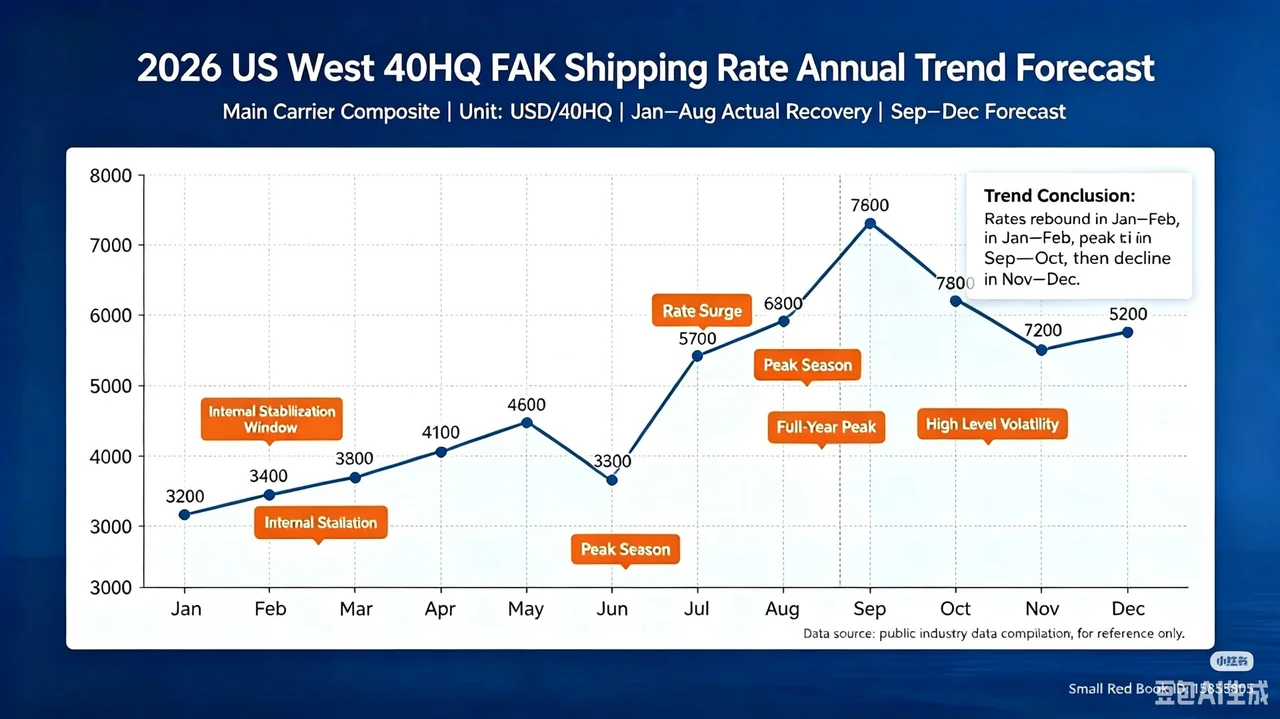
The chart above tracks the monthly FAK (freight-all-kinds) spot rate for a 40HQ from China to the U.S. West. The year opened soft: January around $3,200, dipping to roughly $2,900 by March as post-holiday volumes stayed weak. Rates drifted back to $3,200–$3,300 through the late spring. Then, in July 2026, the market repriced hard — the spot rate more than doubled to about $7,600, peaked near $7,800 in August, eased to $7,400–$7,600 through the autumn, and by December had cooled to around $5,200 as the peak season passed.
Those moves line up with the broader indices. The Drewry World Container Index was near $4,339 per 40-foot box in mid-August 2026, while the China-to-Los-Angeles lane specifically was quoted around $6,244 per 40-foot — and the China-to-New-York lane, which routes around to the East Coast, nearer $8,706. The West Coast is consistently the cheaper of the two because the transit is shorter and avoids the extra Panama or Suez leg.
Why the mid-2026 spike happened
- Blank sailings. Carriers pulled capacity by cancelling sailings — roughly 10 blank sailings on the trans-Pacific eastbound and 7 on related loops in the period — which tightened space exactly when shippers wanted it.
- GRIs and PSS. General Rate Increases and Peak Season Surcharges were announced through the summer, pushing the published rate up in steps rather than all at once.
- Port volume. The Port of Los Angeles handled about 960,464 TEU in July 2026, a strong month that absorbed available capacity and kept boxes scarce.
- Inventory rebuilding. After a cautious first half, U.S. importers restocked ahead of the fall selling and construction season, concentrating demand.
The pattern is familiar: a quiet first half lets rates sag, then a combination of pulled capacity and concentrated peak-season demand snaps them higher. The lesson for a buyer is that the timing of when you book the container matters as much as which carrier you choose.
The structural forces behind the 2026 freight inflation
Beyond the blank sailings and peak-season demand already noted, the 2026 increase is the result of several forces stacking up at once — geopolitical conflict, extreme weather, peak-season supply and demand pressure, and rising operating costs. As of mid-September 2026, all four were active together.
- Geopolitics and rerouted lanes. The Red Sea crisis continued through 2026: Houthi attacks on merchant vessels forced ships to divert around the Cape of Good Hope, adding 7–20 days to each voyage and removing an estimated 5%–10% of effective capacity. At the same time, disruption around the Strait of Hormuz left some vessels trapped and locked up roughly 1.5% of global capacity, tightening space on Asia–Europe and Middle East routes that feed the wider network.
- Weather and port congestion. Drought restrictions on the Panama Canal cut the number of transits and caused large delays for ships bound for the U.S. East Coast, pushing short-term passage costs up. Closer to China, typhoons left vessels waiting 7–10 days at major export ports such as Shanghai and Ningbo; the resulting congestion tied up nearly 4 million TEU of global capacity and pulled schedule reliability down.
- Costs that do not fall. Fuel, insurance and compliance costs all rose through the year, so even when demand softened the floor under rates stayed above the pre-crisis norm.
The practical takeaway for an importer is that the mid-2026 spike was not a one-off — it sat on top of a structurally tighter, less reliable network. That is exactly why booking early, consolidating to FCL and fixing the ocean leg (as outlined above) matter more in 2026 than they did a few years ago.
What the freight rate does and does not cover
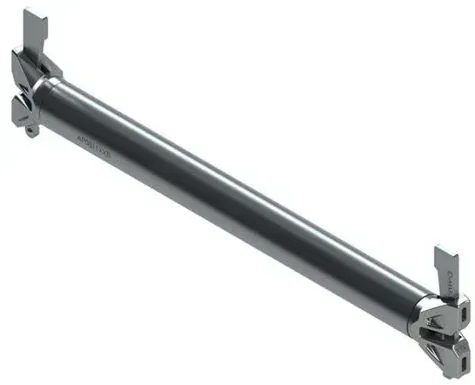
The ocean freight rate quoted per container is the cost to move the box from the origin port to the destination port. It typically includes the sea leg, the carrier's documentation and the terminal handling at both ends. It does not include U.S. customs duties and tariffs, customs brokerage, the inland drayage from the Los Angeles or Long Beach terminal to your warehouse, domestic trucking, insurance beyond the carrier's limited liability, and any detention or demurrage if the box is not returned in time. Budget for those as separate lines, and for a full scaffold order they can add meaningfully to the landed cost.
How to plan a scaffold order around the volatility
- Book early and forecast volume. If you know you will need a container for a project, reserve space weeks ahead rather than at the last minute — the spike months punished spot bookings most.
- Consolidate to FCL. Grouping orders to clear the 15 cbm FCL threshold usually beats paying LCL premiums during a peak.
- Watch the indices. Track the China-to-LA lane weekly; a falling rate is the signal to release held orders.
- Fix the ocean leg, stay flexible on land. The sea rate is the volatile part — lock it with the carrier or forwarder, and keep drayage quotes current separately.
- Quote FOB and let ACE SCAFFOLD handle the factory side. We deliver to the Chinese port; you control the freight forwarder and can switch carriers as rates move.
How ACE SCAFFOLD handles shipping
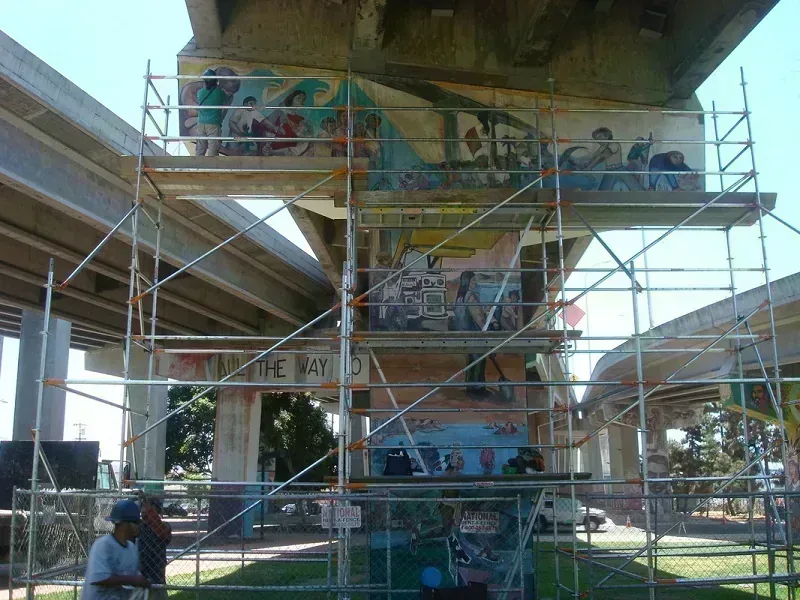
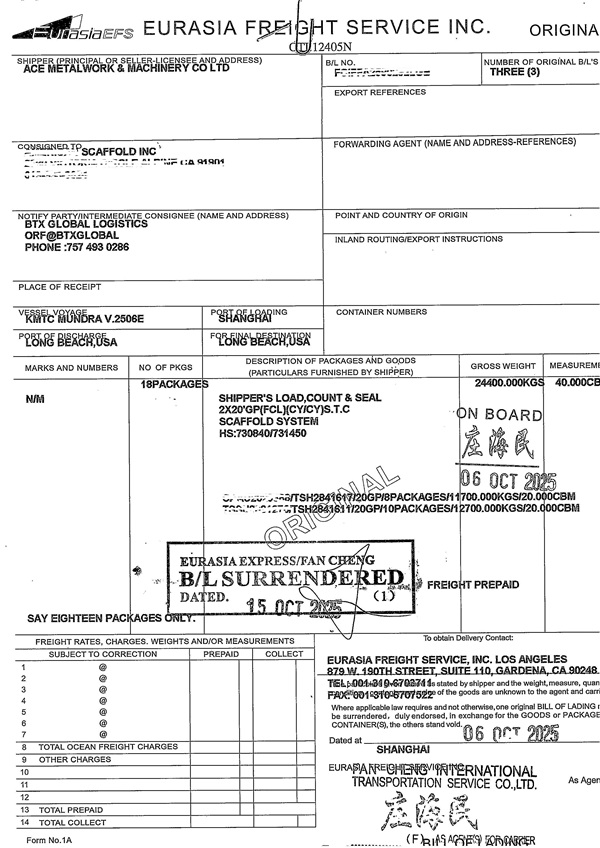
ACE SCAFFOLD currently exports ringlock scaffolding, QES scaffold and steel plank to Long Beach and Seattle. We have dealt on both FOB Shanghai and C&F US port terms in the past. As the sea freight is not stable this year, we always quote on FOB Shanghai terms first; it can then be changed to C&F terms if the buyer accepts our sea-freight quotation before shipment.
Frequently asked questions
How long does shipping from China to the USA West take in 2026? Ocean transit is about 30–40 days port to port (Shanghai or Shenzhen to Los Angeles/Long Beach); add consolidation time for LCL. Air is 8–10 days but far more expensive.
What does a 40HQ from China to LA cost in 2026? It ranged from about $2,900 in the spring to roughly $7,800 at the August peak, settling near $5,200 by December. The mid-August China-to-LA index sat around $6,244 per 40-foot box.
Is FCL or LCL better for scaffolding? FCL wins once your order exceeds about 15 cbm, because you fill a 40HQ with tube, fittings and planks and avoid LCL consolidation fees and delays.
Does the freight rate include U.S. duties? No. The ocean rate covers the sea leg and terminal handling only. Duties, brokerage, drayage to your warehouse and inland trucking are separate.
Why did rates spike in mid-2026? A mix of blank sailings, summer GRIs and Peak Season Surcharges, strong Los Angeles volumes (about 960,464 TEU in July 2026) and restocking demand concentrated capacity and pushed spot rates above $7,000.
Get a landed-cost quote
If you are planning a 2026 or 2027 scaffold purchase, send us the bill of materials and your delivery city and we will quote FOB Shanghai with the export packing, then help you estimate the Los Angeles drayage and duties so the freight swing above does not catch you out. Contact ACE SCAFFOLD for OEM and ODM options and current lead times.
More from ACE SCAFFOLD Blog
- What is ICF means
- ICF bracing setup
- Bracing for ICF House
- Advantages of ICF House
- Ringlock Scaffolding: The Modular System Built for Speed
- Why Contractors Choose Cuplock Scaffolding for Heavy Loads
- Frame Scaffolding: The Reliable Workhorse of the Job Site
- Steel Props: Adjustable Shoring Made Simple
- Scaffold Planks: Steel vs Aluminum Walk Boards
- Aluminum Mobile Scaffold Towers for Fast Indoor Access
- 14 Common Scaffolding Safety Hazards and How to Prevent Them
- Temporary Roofing System User Guide
- What is the packing of scaffolding
- What Is Ringlock Scaffolding
- What Are the Key Differences Between Ringlock and Cuplock Scaffolding?
- Fed Rate Hike Impact on Scaffold Steel Pipe and Zinc Prices