
What is the packing of scaffolding
When you export scaffolding and accessories, the way the goods are packed for shipping decides as much about your landed cost as the product price itself. Most ACE SCAFFOLD orders leave the factory on steel pallets, and the type of pallet you choose changes three things at once: the freight cost, how easily the shipment is unloaded and stored, and how much of the container space you actually use. This article compares the two steel pallets we use most often — the simple steel pallet and the standard steel pallet — so you can pick the right packing for your project.
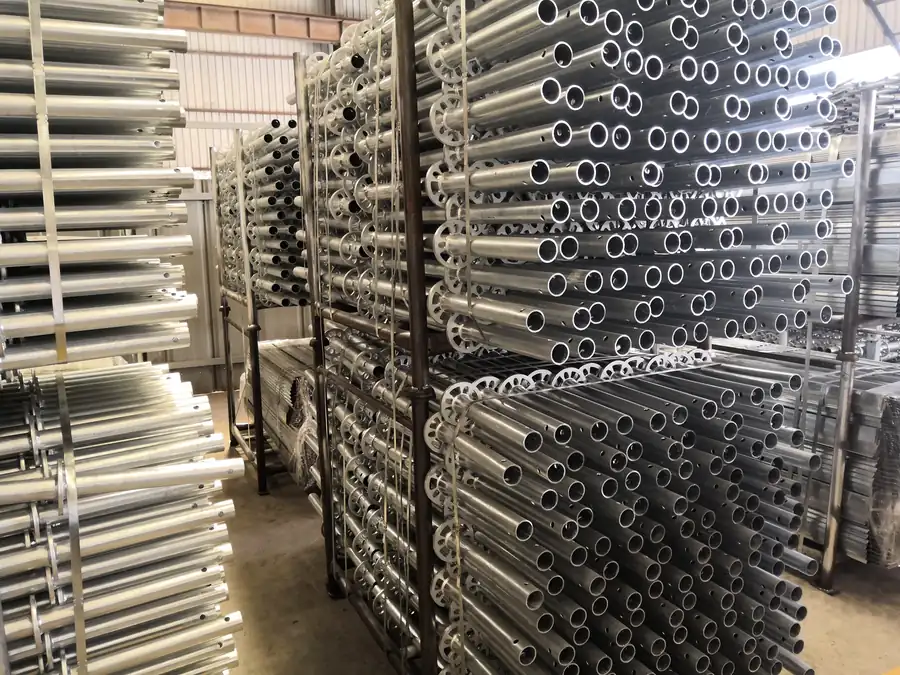
Simple steel pallet
The simple steel pallet is the most economical packing option. It is a plain welded steel base with no stacking lips or posts, so it adds almost nothing to the shipment weight or cost.
- Advantage — no extra cost. Because the base is minimal, there is no added pallet charge. You pay only for the steel and labour already built into the product.
- Disadvantage — cannot be stacked. Without stacking posts, one pallet cannot be placed safely on top of another. That matters at two points in the journey: in the container and in the warehouse.
In a 20 ft or 40 ft container, non-stackable pallets must sit in a single layer. Once the pallet itself and its cargo are loaded, a single simple-steel-pallet load often reaches 3,000–4,000 kg. Because the pallets cannot be stacked to use the vertical height of the container, a large part of the available cube is left empty — so you pay for container volume you never fill.
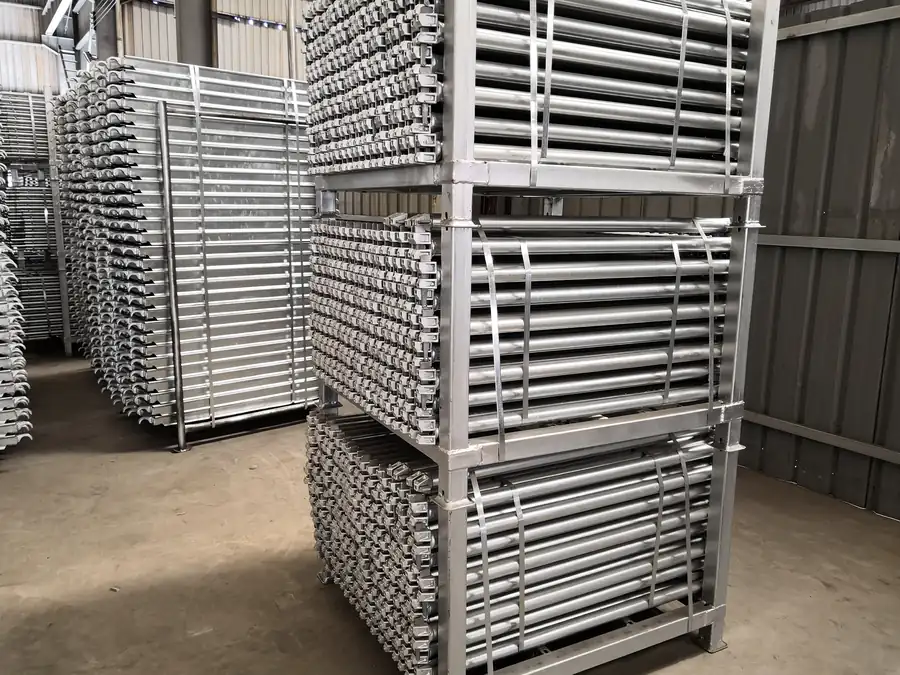
Standard steel pallet
The standard steel pallet adds welded stacking posts (or a perimeter frame) so loaded pallets can be stacked securely. This small change has a big effect on handling and space. The standard steel pallet is also called a storage rack, as shown on the ringlock scaffolding page.
- Advantage — stackable. Pallets can be stacked two or three high, which makes unloading faster and lets you store more in the warehouse on the same floor area. Stacking also lets the container use its full height, raising space utilisation and lowering the cost per tonne shipped.
- Disadvantage — extra cost. The reinforced base and posts add material and welding. As a guide, a standard steel pallet costs about USD 75.00 per pallet. Each standard pallet typically holds 2,000–2,500 kg of scaffolding goods.
Which packing should you choose?
Choose the simple steel pallet when your priority is the lowest possible ex-works price and your cargo volume already fills the container on a single layer — for example dense, heavy fitting loads. Choose the standard steel pallet when you need to stack in transit or storage, or when better container cube utilisation saves more than the ~USD 75.00 per-pallet surcharge. For most full-container scaffolding shipments, the standard pallet pays for itself through lower freight per tonne.
For a packing plan matched to your product mix, order quantity and destination, contact the ACE SCAFFOLD team. We can advise on pallet type, loading patterns and the HS code (73084000) that applies to scaffolding exports.
More from ACE SCAFFOLD News
- What is ICF means
- ICF bracing setup
- Bracing for ICF House
- Advantages of ICF House
- Ringlock Scaffolding: The Modular System Built for Speed
- Why Contractors Choose Cuplock Scaffolding for Heavy Loads
- Frame Scaffolding: The Reliable Workhorse of the Job Site
- Steel Props: Adjustable Shoring Made Simple
- Scaffold Planks: Steel vs Aluminum Walk Boards
- Aluminum Mobile Scaffold Towers for Fast Indoor Access
- 14 Common Scaffolding Safety Hazards and How to Prevent Them
- Temporary Roofing System User Guide